
How Architectural Models Are Packaged, Shipped and Installed
An architectural model must be designed not only for presentation, but also for the journey to its final location.
Its size, fragility, base, display case, route into the building, and installation requirements should be considered before fabrication begins.
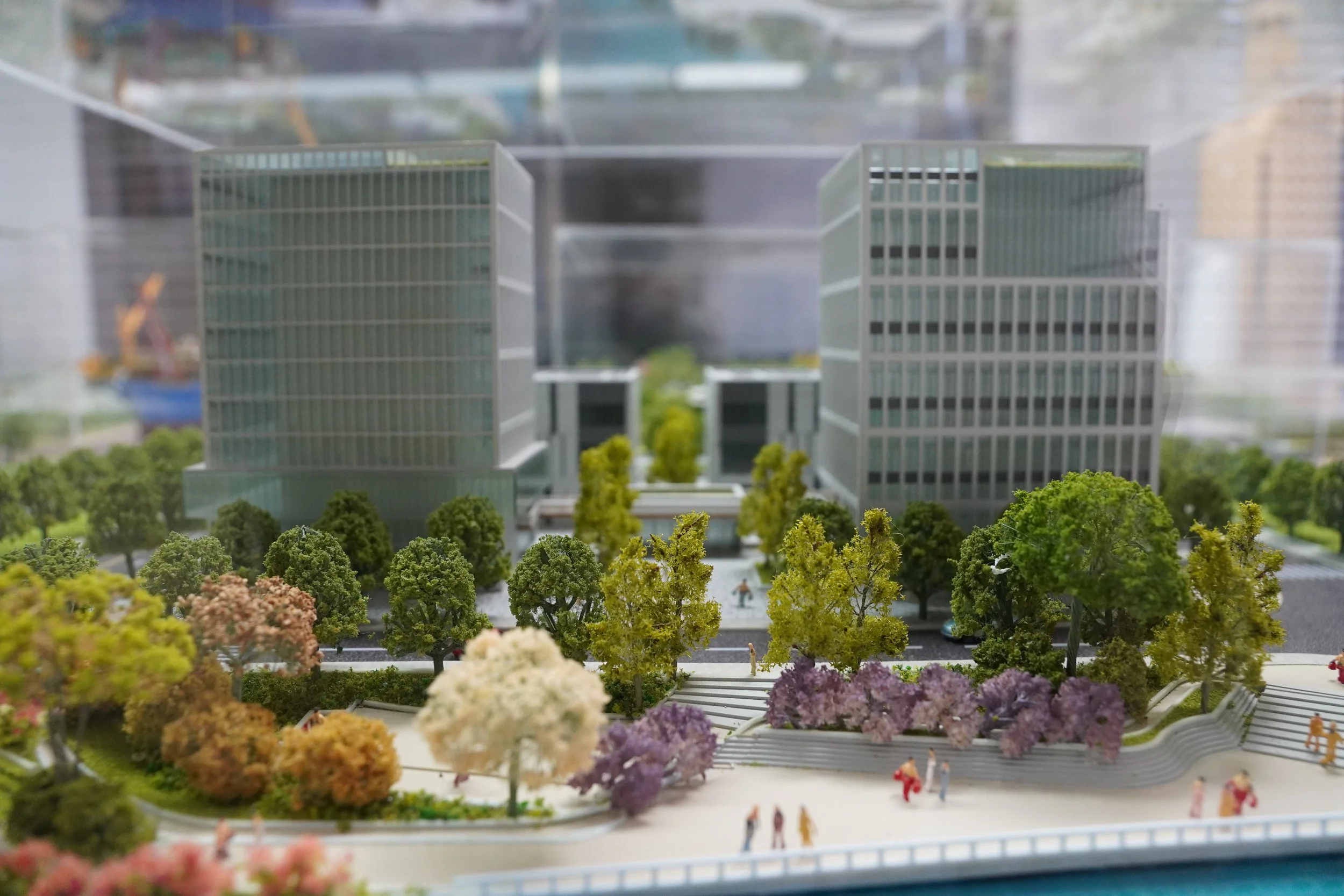 Waterfront Campus · 1:96 · ABS
Delivery planning starts with the model scope
During project scoping, we review:
- Final model dimensions
- Base, stand, and display-case requirements
- Delivery destination
- Transportation limits
- Door and elevator dimensions
- Stairs, corridors, and loading access
- Available power
- Handling requirements
- Final placement and installation responsibilities
Identifying these constraints early can prevent the finished model from becoming difficult to transport or install.
When should a model be divided into sections?
Large models may be designed in sections when they cannot be safely transported or moved into the final space as one piece.
Sectional construction may be required because of:
- Shipping dimensions
- Model weight
- Door or elevator limits
- Limited site access
- Handling requirements
- Future relocation
- Phased development
- Removable or interchangeable content
The joints, alignment, electrical connections, base, and final assembly method must be coordinated as part of the model design.
How is a model protected?
Packaging depends on the model's size, fragility, destination, and intended handling.
Depending on the project, protection may include:
- A fitted transport case
- Protective foam and internal supports
- A custom shipping crate
- Removable covers
- Secured model sections
- Separate packaging for delicate components
- Handling and unpacking instructions
The objective is to prevent movement, vibration, pressure, dust, and accidental contact during transportation.
How is the delivery method selected?
The appropriate method depends on the size of the model, destination, schedule, and level of handling required.
Options may include parcel delivery, freight, dedicated transportation, or coordinated on-site delivery. Fragile or complex models may require special handling rather than a standard shipping service.
The delivery plan should also account for the time required to unpack, assemble, connect, inspect, and position the model.
What happens during installation?
Depending on the project, installation can include:
- Unpacking and inspection
- Assembly of model sections
- Placement on a stand or display base
- Installation of a protective cover
- Alignment and final adjustment
- Lighting and power connections
- Functional testing
- Removal of packaging materials
The site should be ready before the model arrives, with appropriate access, display support, power, and clear responsibility for final approval.
What should the client provide?
Before production is finalized, provide:
- Delivery address and site contact
- Required delivery date
- Loading and parking information
- Door, elevator, and corridor dimensions
- Stairs or other access restrictions
- Final display dimensions
- Available power
- Building-access hours
- Installation and insurance requirements
Photographs or a short video of the delivery route can also be useful for complex installations.
About this guide
This guide was prepared by the Carve Model team using our experience defining, coordinating, fabricating, reviewing, packaging, and delivering physical models. Project requirements vary, so recommendations are confirmed during the review of each project.