Physical Models, Renderings, Animation, AR and VR: What Each Communicates Best
Designs can be communicated through physical models, renderings, animation, augmented reality, and virtual reality. Each medium helps an audience understand something different.
The right choice depends on the audience, the information being communicated, and the decision the presentation needs to support.
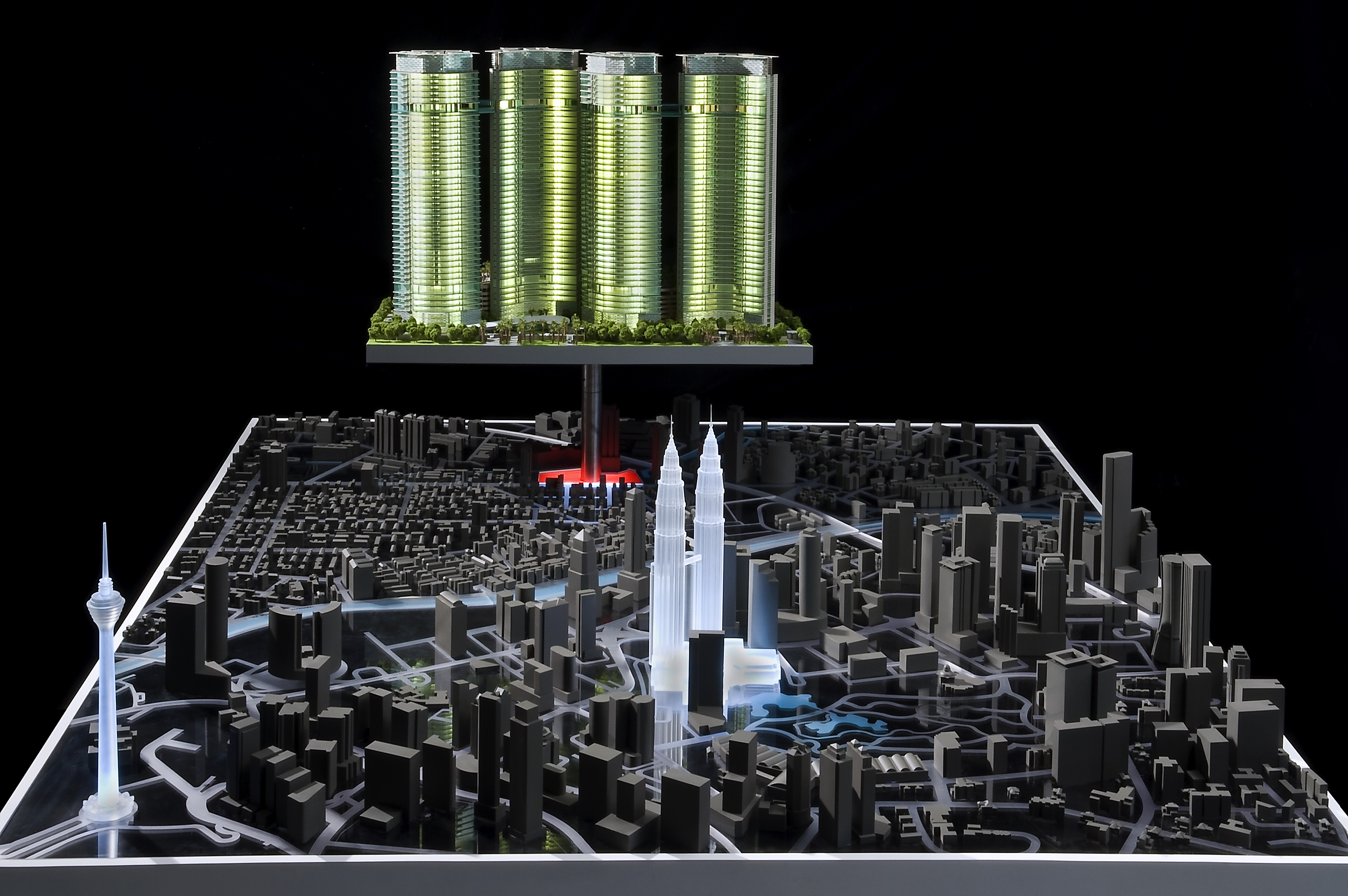 Masterplan · 1:750 · ABS
Renderings: appearance and atmosphere
Renderings communicate materials, colors, lighting, landscape, human activity, and the intended experience from a selected viewpoint.
They help an audience imagine what a space may look and feel like, but they show the project through a camera position chosen by the creator.
Animation: sequence and narrative
Animation guides the audience through a planned series of views.
It can explain movement, circulation, construction, assembly, or changes over time. It is effective for telling a clear story, but the audience follows a predetermined route.
AR: design in an existing environment
Augmented reality places digital content over a view of the physical world through a phone, tablet, or headset.
It can help audiences explore placement, approximate scale, alternative configurations, and design information within an existing site or space.
VR: immersive spatial experience
Virtual reality places the viewer inside a digital environment at an apparent full scale.
It can help communicate interiors, sightlines, circulation, and spatial experience. However, it usually requires dedicated equipment and is often experienced individually.
Physical models: shared spatial understanding
A physical model gives the audience tangible evidence that can be examined together from multiple viewpoints.
It is particularly effective for communicating:
- Overall form and proportion
- Building massing
- Site and urban context
- Circulation and access
- Relationships between buildings and open space
- Topography and landscape
- Multiple viewpoints at once
People can gather around the model, point to the same relationships, and discuss what they see without specialist software or equipment.
Which medium should you use?
Use a rendering when the priority is visual appearance and atmosphere.
Use animation when the priority is sequence, movement, or a controlled narrative.
Use AR when the priority is placing digital information within an existing physical environment.
Use VR when the priority is an immersive, full-scale spatial experience.
Use a physical model when the priority is shared understanding of scale, form, context, and spatial relationships.
When should you combine them?
Many projects benefit from more than one medium.
An architectural model can establish the overall project and its relationships. Renderings can show material character and atmosphere. Animation can explain circulation or sequence. AR can connect a proposal to an existing environment, while VR can provide an immersive experience of particular spaces.
The best combination is determined by what the audience needs to understand—not by using every available technology.
Coordinating physical and digital deliverables
Carve's core deliverable is the physical model. When a project benefits from additional communication formats, animation, AR, VR, or other digital presentation materials can be separately scoped and coordinated alongside it.
Requirements and availability depend on the intended audience, source information, platform, and decision the presentation needs to support.
Begin with the audience and decision
Before selecting a communication medium, ask:
- Who is the audience?
- What do they need to understand?
- What information is difficult to interpret?
- Will they experience the presentation individually or together?
- What decision must the presentation support?
The answers determine whether the project needs a physical model, a digital presentation, or a coordinated combination.
About this guide
This guide was prepared by the Carve Model team using our experience defining, coordinating, fabricating, reviewing, packaging, and delivering physical models. Project requirements vary, so recommendations are confirmed during the review of each project.